Every design starts with an even better story.
— I did a master's in logistics in Spain. What about you?
— Great. I did a master's in service design.
— What's that?
— What do you think it is?
— Something graphic?
What is service design? It's a question I get again and again whenever I mention what I do now. People from all kinds of professions are curious: doctors, engineers, biologists, nurses, architects and so on. Perhaps business managers, or people who've done an MBA, are the ones who feel closest to it. “Oh, something like Design Thinking?” they say.
But business owners too, when they hear me talk about the different ways I could help them improve their businesses. “Is it marketing? How could I make more money?” Questions that try to clear up their constant doubts.
With a smile, I try to make sense of how I explain what I do, taking into account the way the other person thinks. It isn't simple, because we all understand things differently; we're all different. But it's worth trying, right?
I've actually come across different definitions, depending on each particular context. Whether it's a university, a consultancy, a public organisation or a big bank. Each one adapts the definition to its own way of seeing the world and to its own needs.
So what is it for me? My pitch has changed over time. From orchestrating experiences, improving services designed around people, and needs-centred consulting, to simply creating services or businesses ‘in a different way’.
These days I feel most comfortable with this definition: service design gives you another perspective when you create or improve a service. Simple: another perspective. That's it.
Why another perspective? I studied computer engineering and worked at several financial organisations whose decisions affected millions of customers. And I can vouch that it's a different way of solving problems.
It's no longer just the Excel sheet where you enter lots of numbers by month, project and calculate your ROI to see whether the business case gets implemented or not. It's not just receiving the monthly Ipsos research report by email to find out what people think of the company. And it's certainly not just opening the business newspaper Gestión online to see how the market is behaving.
Nor is it making decisions based on what I think is right, since my judgement is relative to the possible solution that could be implemented. Nor is it just the decision of whichever Vice President is in charge, trying to hit the year-end targets to get the bonus.
It isn't a solo act, as it often was for me in the classrooms at the Católica, my university. There, on my computer, I had to map a process, look for solutions and take it into the digital world by programming it in code. I was the ‘wizard’, the one steering the solution, and how it was executed depended on me. Sure, there were always constraints from the different people involved (stakeholders), but in the end the solution rested on my skills and on what I believed would be best: my big proposal.
Maybe that side of me, the one that believes it can solve everything and feels it's right, still lingers, but it has evolved. It has blended with empathy, with looking for what's best for others, with reflection, with critique and, finally, with getting to something that has a real positive impact.
Nor is it just organising focus groups to find out what customers want and then putting together a presentation with the main findings, which we may summarise based on the information we wanted to find, or the information that suits us. Creating lots of biases.
It's not that. Although you can still do all of the above, service design is a different or complementary way of creating or improving services.
Isn't almost everything a service? What isn't a service? Look at all the things you do in a day and at the people involved who help you meet your needs in exchange for something. Some ideas? Maybe transport, buying clothes or food, psychological support, teaching, watching Netflix or YouTube, going to the doctor or to a fair. We could keep listing activities and we'd see that every activity we come into contact with is a service. So if everything is a service, everything could be designed, right?
So if everything is a service, everything could be designed, right?
But then, what does design do? Design teaches you to explore and to have empathy for the other person when you create a solution. And you don't only build empathy with an organisation, but also in the relationships of everyday life: with your partner, your family, your friends, your colleagues, strangers.
It has a multiplier effect. It changes the way you relate to your surroundings. Your sensitivity to what's around you grows, and so does your concern for the other person's wellbeing.
So if design lets us see the world differently, and service is everything we do, the possibilities for impact are endless. And that's what makes it magical. There isn't just one path; there are millions. It isn't individual; it's a shared effort. That way, the act of helping will turn into a positive impact, which in turn will become wellbeing, which will finally bring peace of mind. And isn't that happiness?
So conscious design makes us happier. It lets us change the world in all its forms and possibilities. The interesting part is knowing which specific area we'll focus on to have a positive impact on our surroundings. Do you know yours?
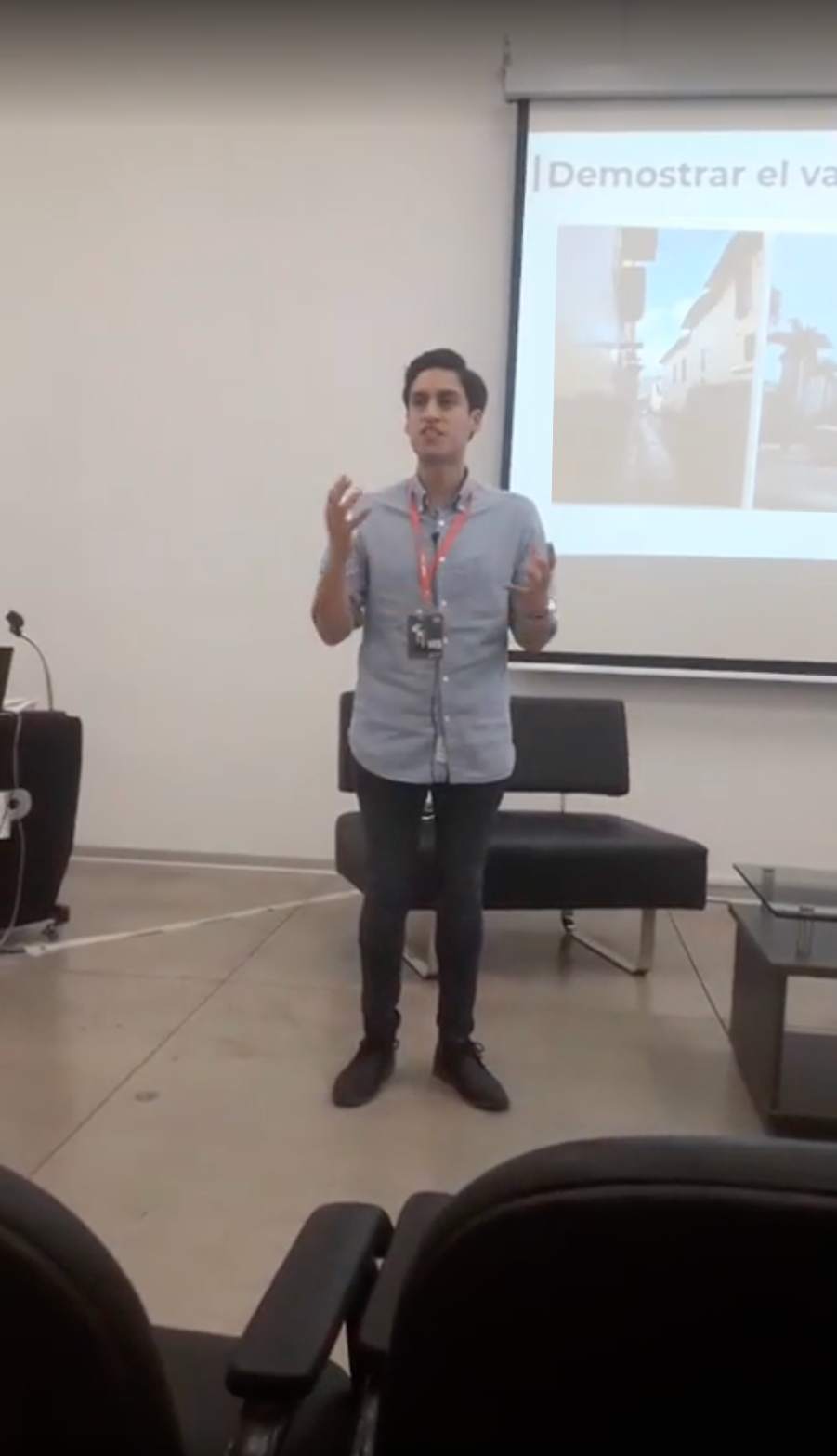
PS1: You can see my view on service design in the PUCP Colloquium talk here.
PS2: In a future article I'll explore the theoretical side of service design and how it complements other professions.
PS3: Read about experience design here.
The best design is that which proceeds from the heart, which involves all the emotions, and associates them with the head, yet as inferior to the heart; and the hand, yet as inferior to the heart and head; and thus involves the whole person.
Have a great day!
Originally written in Spanish as “Diseñando servicios (I)” and published on Medium on 19 December 2021. English version by the author, November 2026. Read it in Spanish.